Nurturing biocultural memory during crisis: a methodological approach and its influence on wetland birds and community conservation in Chile
Abstract
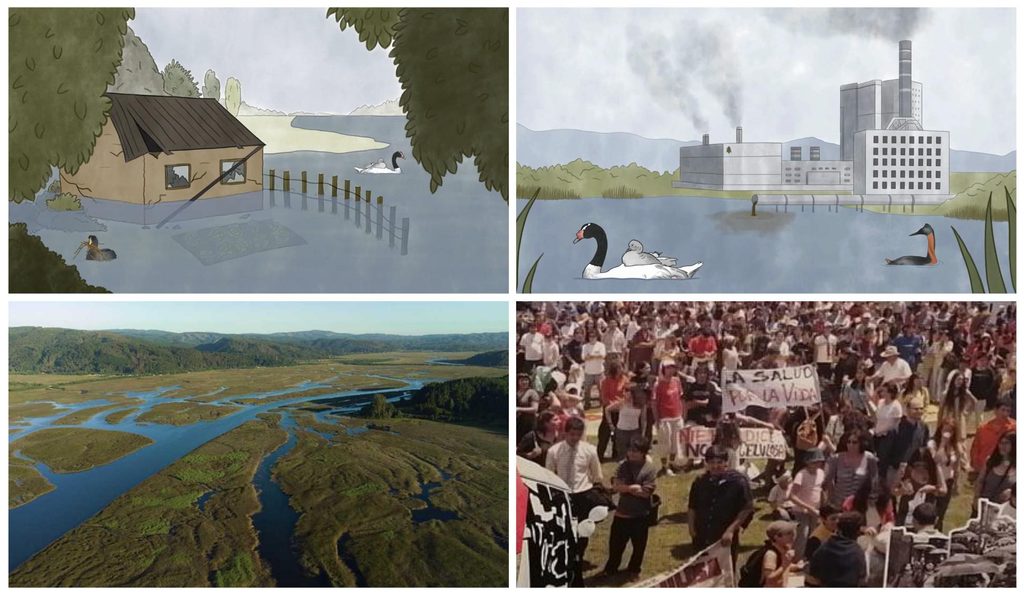
During social-ecological crises, face-to-face, in-person biocultural conservation fieldwork can be hindered or halted, jeopardizing research continuity and impacting researchers’ ability to fulfill responsibilities to local communities. We report on our experience developing adaptive methods to ensure continuity of practice with semi-remote local participants and local sharing of research that was funded to begin when the COVID-19 health crisis swept the world. We investigated which birds function as sentinels of biocultural memory and landscape transformation in 10 rural areas in the Río Cruces Wetland Sanctuary in Southern Chile. We developed a collective approach with a transdisciplinary team of six local “biocultural monitors” as co-researchers. Monitors used kits to complete individual and family/household interviews that recorded 87 bird species (4 being particularly significant) and 27 biocultural memory sites throughout the wetland. Monitors also co-created timelines of key historical landscape transformation events and filmed memory walks and navigations with key participants or “memory keepers.” We worked with participant communities to film and screen a documentary as the centerpiece of our public Great Dialogue of Memory event and synthesized a “seven-principle manifesto” that called for the conservation and restoration of the wetland and its biocultural heritage. We shared these products with media, policymakers, and local communities using the Ethno-ornithology World Atlas (EWA) platform. This novel approach is replicable by researchers who wish to integrate local communities and their knowledge, using the family/household as the smallest unit, to study biocultural memory and to promote high ethical standards in the coproduction of knowledge and conservation of wetlands, even during unexpected events and crises.
Información
2026
Artículo
local_offer Líneas de acción