Colourful agrobiodiversity: morphology and phenology of bean landraces to face commodification of the commons in the southern Andes
Abstract
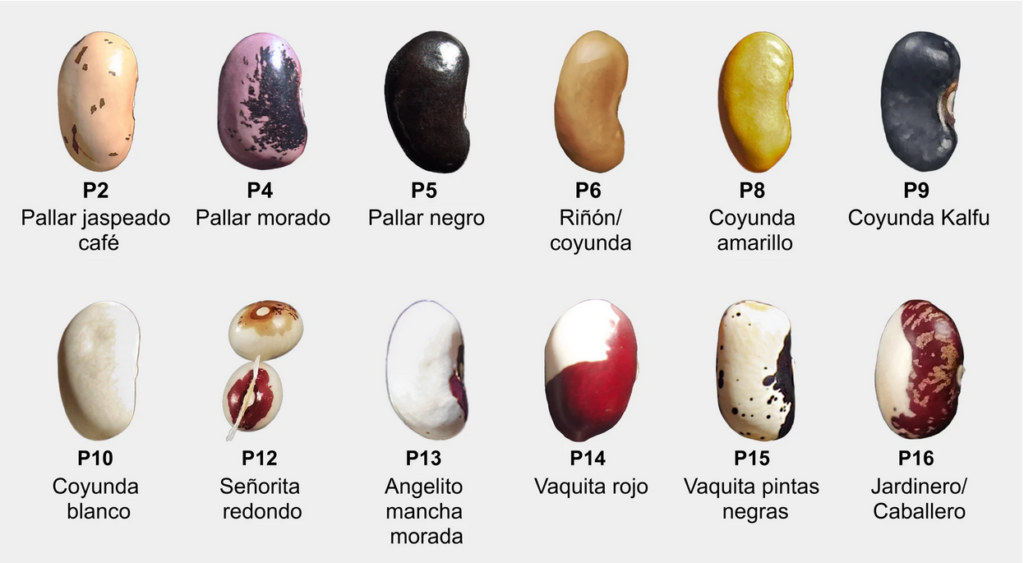
In recent decades, agrobiodiversity has significantly declined due to genetic erosion. Conservation strategies in response include both ‘in situ’ and ‘ex situ’ methods, with a third approach called ‘in vivo’ conservation, standing out as a promising approach for conserving agrobiodiversity within active agricultural systems by maintaining live cultivars rather than storing frozen genetic material. Bean landraces (Phaseolus spp.) from southern South America have been cultivated for more than a thousand years, and thus hold deep cultural and ecological significance; however, little information exists about their morphological and phenological characteristics. We propagated bean landraces in homegardens over two agricultural seasons (2022–2024) in the La Araucanía region, southern Chile. We implemented a transdisciplinary and participatory approach involving local women gardeners, with whom we conducted in vivo conservation trials in homegardens, under real cultivation conditions, integrating botanical characterization with traditional knowledge and local management practices. This approach allowed the documentation, for the first time, of phenological and morphological diversity of 30 bean landraces while strengthening community-based conservation. Detailed phenological and agrobotanical traits were recorded, including growth habits, morphological characteristics, and seed metrics. The collected data were analyzed using Principal Component Analysis to identify patterns and correlations among traits. We found significant morphological variability, especially in leaf, flower, pod, and seed traits, highlighting the potential to identify subgroups within the landraces. This work not only supports the conservation of these valuable landraces but also strengthens the local food systems, offering a pathway for communities to face commodification of this agrobiodiversity in order to safeguard their agricultural heritage and enhance local social-ecological resilience.
Información
2026
Artículo
María José Romero
mjromerosilva@gmail.com
local_offer Líneas de acción